




Most genset battery replacement callouts in Malaysia start the same way: the genset cranks slowly, or doesn’t crank at all, and the owner assumes the engine has failed. In reality, the starting battery is the single most common failure point in a diesel generator that is otherwise healthy — and it is the component most often ignored until it lets you down during a power cut. A generator sitting idle for weeks, a faulty battery charger, or a hot plant-room environment can kill a 12V or 24V starting battery in under two years. In this guide, MGM Generators explains the warning signs that mean your battery is dying (not your genset), what a genset battery replacement costs in Malaysia, and how to keep your standby power system ready for the next outage.
Why the Starting Battery Is the Most Overlooked Genset Component
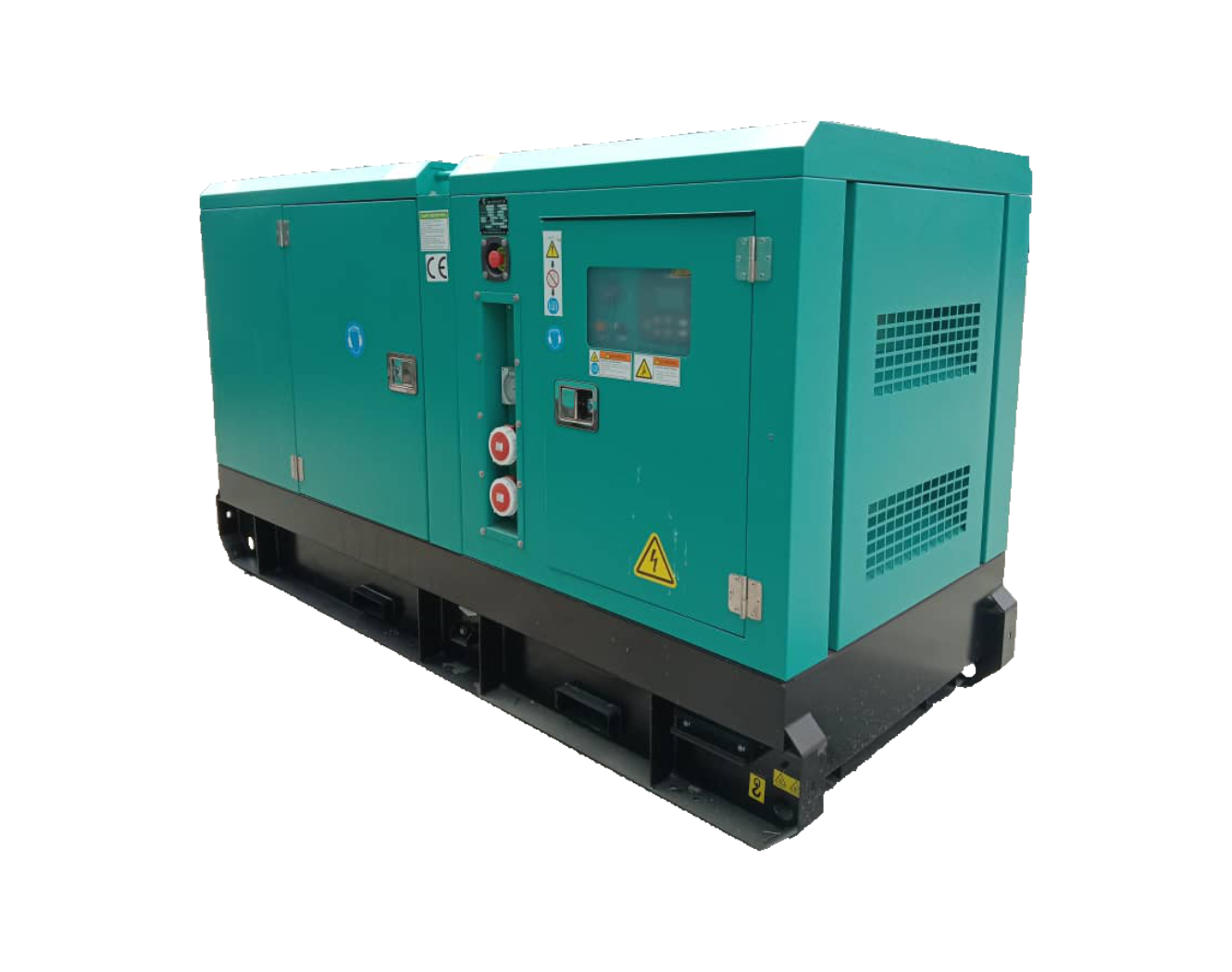
Every automatic genset depends on its starting battery the moment TNB power fails. The controller senses the outage, signals the starter motor, and the engine must fire within seconds — usually before the ATS has fully switched the changeover. If the battery can’t deliver cold cranking amps, none of that happens. Your soundproofed diesel generator may be in perfect mechanical condition, yet completely useless at 2 a.m. during a monsoon storm.
Genset batteries are not car batteries
A common mistake we see at customer sites is a replacement with a generic automotive battery from a workshop down the road. Genset manufacturers specify a heavy-duty flat-plate or tubular starting battery (typically 100Ah to 200Ah for sets from 20 kVA to 500 kVA) sized for high cranking current and long float-charge life. Automotive batteries are built for many shallow discharges with frequent engine starts; a genset battery sits on float charge for weeks, occasionally delivers a hard cranking burst, and must survive constant ambient heat. Using the wrong spec is one of the top reasons batteries die in 12 months instead of 24–36.
7 Warning Signs You Need Genset Battery Replacement
Don’t wait for a failed blackout test. Watch for these signs:
- Slow or laboured cranking — the engine turns over sluggishly or needs more than the normal two- to three-second crank to start.
- Control panel alarms — low battery voltage, charger fail, or “battery test” warnings on the Deep Sea / SmartGen controller.
- White or green corrosion on terminals and clamps, which adds resistance and starves the starter of current.
- Battery age over 24 months — even a healthy-looking battery loses capacity; we recommend planned replacement every 2–3 years on standby sets.
- Swollen or leaking case — replace immediately; heat and overcharging warp plates and can crack cases in Malaysian plant-room temperatures.
- Frequent failed auto-start tests — if your weekly or monthly exercise runs fail to reach rated voltage, the battery is rarely the full story but is usually the first cause.
- Charger working, battery still weak — a charger that reads “float” while the battery won’t hold load indicates sulfation: the battery itself is finished.
If your set shows several of these, our team’s guide to generator repair and maintenance helps you judge whether it’s a simple battery job or a deeper electrical issue.
What Does Genset Battery Replacement Cost in Malaysia?
Ballpark figures for the Malaysian market in 2026:
- Lead-acid starting battery, 100–120Ah (typical for 20–75 kVA sets): roughly RM 350–RM 700 per battery.
- 180–200Ah battery (100–350 kVA sets, often 24V with two in series): roughly RM 600–RM 1,500 each.
- On-site replacement labour in Klang Valley: typically RM 150–RM 350 depending on access, after-hours callout, and disposal of the old unit.
- Gel / AGM maintenance-free options: 30–60% higher unit cost, but better tolerance of heat and less topping-up — popular for rooftop and basement plant rooms.
Compared with the cost of a production stoppage, a factory hour lost, or a spoiled cold-chain consignment, battery replacement is one of the cheapest insurance line items in your power budget. Bundling it into an annual service contract removes the surprise entirely — see our genset maintenance contract options.
Battery Maintenance: Get 3 Years Instead of 1
Replacement is inevitable; early replacement is optional. Three habits double starting-battery life:
Check the charger, not just the battery
The float charger is part of the battery system. Verify it reads bulk/float correctly and that output is 13.5–13.8V (12V systems) or 27–27.6V (24V systems). A charger stuck in “off” kills a battery in a fortnight; one stuck in “boost” boils it. A technician can confirm charger health in minutes during any service visit.
Exercise the set under real load
A weekly no-load run barely recharges the battery after the start crank. A monthly run at 30–80% load (or with a rented load bank) keeps both engine and battery conditioned. Cold-cranking readiness correlates strongly with regular loaded exercise.
Keep terminals clean and electrolyte topped up
Annual terminal cleaning, torque checks, and distilled-water topping-up (for flooded types) prevent the slow resistance build-up that turns a strong battery into a weak one. Remember to disconnect the charger before disconnecting the battery, and earth strap before negative clamp on removal.
DIY Replacement or Professional Service?
Swapping a battery physically takes 30 minutes, but we advise professional replacement for three reasons: the controller must be reconfigured so the auto-start exercise logic and battery alarms match the new battery’s chemistry; series-connected 24V banks must be replaced as a matched pair or the new cell works itself to death; and dropping a genset’s control supply can reset parameters for synchronising and mains-failure logic. The same applies if your set shows other starting faults — our walkthrough on a genset that won’t start covers the full cranking-chain diagnosis.
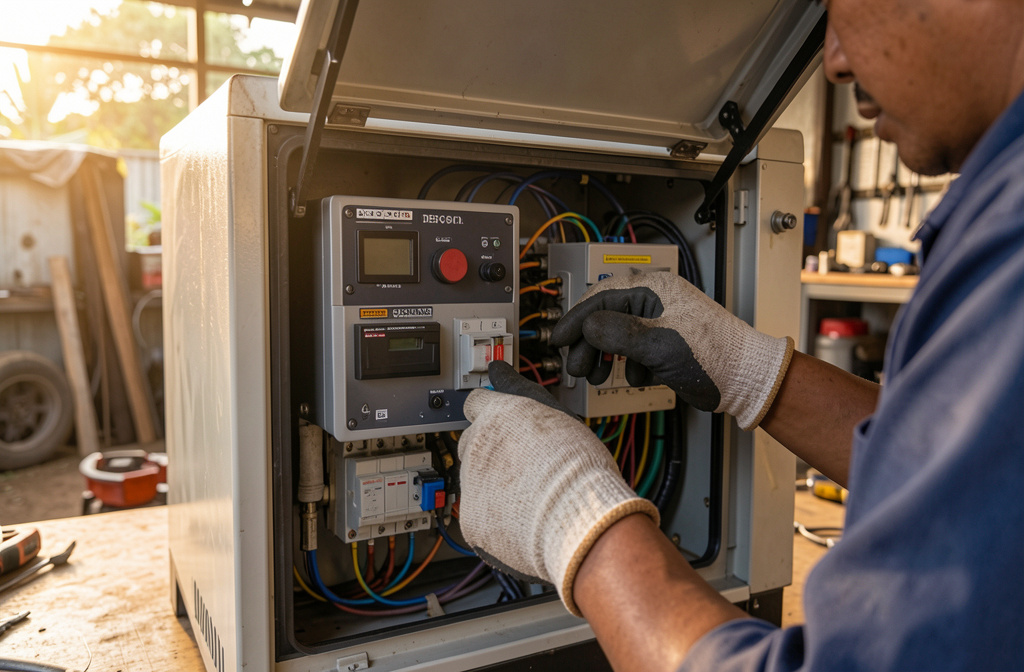
Here is our technician reading battery and charger status on a customer’s genset controller — low-voltage and charger-fail alarms like these are the first clue that a battery replacement is due:
Keep Your Standby Power Ready — Book a Battery Health Check
MGM Generators supplies and replaces correct-spec starting batteries for all major genset brands (Perkins, Cummins, Kohler, Mitsubishi, FG Wilson) across Klang Valley and nationwide, with same-week scheduling and disposal of your old battery included. If your set is more than two years old since its last battery change, book a battery and charger health check now — it takes 20 minutes and removes the most common cause of blackout failure.
Call us now: +6012 9689816
Visit our contact page to submit an enquiry form.
WhatsApp: Chat with us on WhatsApp
Contact page: Send an enquiry form